Dad SVG Cut File, Shirt for Dad SVG
First Impressions: Warm, Simple, and Ready for Real Fabric
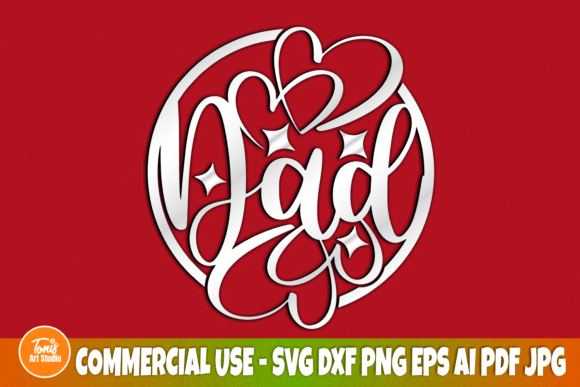
When I opened Dad SVG Cut File, Shirt for Dad SVG, I didn’t see flashy effects or overdesigned flourishes—I saw something that felt immediately wearable and heartfelt. The layout is clean and centered, with balanced letter spacing and a gentle weight to the letterforms. It’s not overly decorative, which is exactly what makes it strong for embroidery. This isn’t a design shouting for attention; it’s one that settles comfortably on a sweatshirt cuff, a baby onesie chest, or a linen tea towel. As a designer who regularly translates digital graphics into stitched reality, I appreciated how the shapes avoid thin serifs, sharp interior corners, or micro-details that vanish under thread.
A Real-World Test: Embroidering a Father’s Day Tote Bag
Last week, I used Dad SVG Cut File, Shirt for Dad SVG for a custom embroidered canvas tote—intended as a small-batch boutique product for a local gift shop. I sized it to fit a 4×4 hoop (standard for most home embroidery machines), digitized it with moderate stitch density, and chose a matte cotton thread in navy for contrast against natural canvas. The result? Crisp edges, legible lettering at 3.5 inches wide, and zero puckering—even without heavy cutaway stabilizer. That tells me the original vector structure is well-proportioned and scalable. It held up beautifully on textured fabric, and customers responded positively to its quiet sincerity—not “cute,” not “trendy,” but unmistakably personal.
Where It Shines—and Where to Pause
Dad SVG Cut File, Shirt for Dad SVG works especially well for:
- Custom apparel: Sweatshirts, t-shirts, and dad-themed aprons benefit from its straightforward readability at medium scale.
- Baby embroidery: On onesies or burp cloths, it reads clearly even when stitched small (down to ~2.75” wide) with simple fill and satin stitch borders.
- Embroidered patch production: Clean outlines and minimal interior detail mean clean laser-cutting or heat-transfer backing compatibility.
- Holiday and personalized gifts: Paired with neutral fabrics and quality thread, it elevates handmade presentation without competing with the recipient’s story.
That said, proceed thoughtfully with:
- Stretchy or thin fabrics: Like lightweight knits or jersey—always pair with tear-away + light cutaway stabilizer to prevent distortion during stitching.
- Curved surfaces: Caps or beanies require re-digitizing for proper stitch direction and reduced pull—don’t assume the SVG scales cleanly onto a curved hoop.
- Dark or heavily textured backgrounds: Test thread color contrast first. A light gray or cream thread may disappear on charcoal fleece; go bolder if needed.
- Frequent-wash items: Like kitchen towels or baby blankets—verify stitch density isn’t too sparse, and consider reinforcing satin-stitched letters with a light running stitch outline.
Design Integrity Meets Commercial Practicality
As an Etsy seller and craft business owner, I look beyond aesthetics—I ask: does this design support trust, value, and repeat buyers? Dad SVG Cut File, Shirt for Dad SVG does. Its clarity builds confidence: customers recognize the sentiment instantly, and the lack of visual noise keeps focus on craftsmanship, not clutter. When used on a premium item—say, an organic cotton pillow cover or a hand-dyed tote—it doesn’t cheapen the piece; it grounds it. That matters for brand consistency, especially if you’re building a line around family-centered themes (Father’s Day bundles, nursery collections, or matching parent-child sets).
What Every Embroidery Designer Should Check Before Stitching
This isn’t just about loading a file and hitting “start.” Here’s my real-use checklist for Dad SVG Cut File, Shirt for Dad SVG:
- Test on scrap fabric first—especially if using textured weaves or blends. Watch how the letter spacing holds up after hooping and stitching.
- Review stitch density in your embroidery software. If the file came pre-digitized, confirm fill areas aren’t overly dense (risking stiffness) or too light (risking transparency on dark fabric).
- Confirm hoop size compatibility. While the SVG scales freely, embroidery files derived from it must match your machine’s max hoop dimensions—no point scaling to 6 inches if your machine only handles 5×7.
- Inspect tiny details—like inner counter spaces in “a” or “d.” If they’re under 0.12”, they’ll likely close up or distort in thread.
- Mock it up in black and white before finalizing thread colors. Does the shape hold its weight? Does it read equally well reversed (e.g., on a dark shirt with light thread)?
- Use appropriate stabilizer—lightweight cutaway for stable wovens, hybrid for knits, and always test washability if selling finished products.
- Verify licensing. Since this is listed as a digital download for Cricut and Silhouette use, double-check whether commercial embroidery rights are included—especially if you plan to sell embroidered totes, patches, or apparel on Etsy or at craft fairs.
Final Thought: A Quietly Confident Design Asset
Dad SVG Cut File, Shirt for Dad SVG won’t win awards for complexity—but it doesn’t need to. In the Crafts and Graphics space, where authenticity and usability drive sales, this design earns its place through restraint, balance, and real-world adaptability. It’s the kind of asset I keep in my “go-to sentiment” folder—not because it’s flashy, but because it stitches cleanly, sells steadily, and feels genuinely warm in the hands of someone giving a handmade product with meaning. For embroidery designers, small shop owners, and creative entrepreneurs building thoughtful collections, it’s less of a trend and more of a reliable tool—one that works as hard as you do.