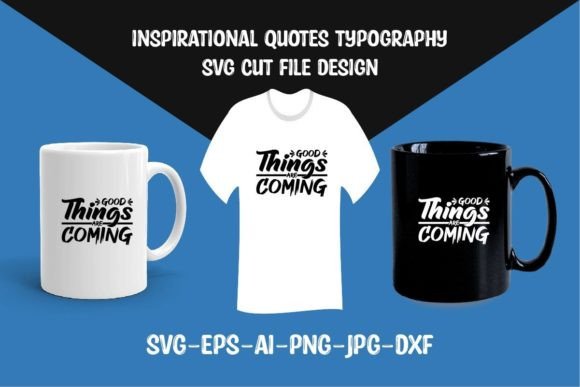
Good Things Are Coming SVG Cut File: Graphics for Crafts & Local Branding
As a brand designer who’s helped over 80 local businesses—from artisanal bakeries to indie candle studios—build cohesive, shelf-ready identities, I opened Good Things Are Coming - SVG Cut File with one question in mind: “Does this feel like a tool—or a shortcut?” The answer? It’s both. But only when used intentionally.
A First Impression That Feels Warm, Not Generic
The design arrives as clean vector art—no pixelation, no jagged edges—and immediately reads as hopeful, gentle, and quietly confident. It’s not flashy or overly ornate; instead, it leans into soft curves, balanced spacing, and subtle decorative flourishes (think delicate leaf motifs or light script swashes). This isn’t bold corporate typography—it’s the kind of graphic design asset that says “handmade with care” without saying a word. It suggests organic, feminine, or seasonal brand personalities—ideal for a small-batch skincare line launching spring renewal kits, a neighborhood florist designing limited-edition gift tags, or a children’s boutique building back-to-school packaging.
Where This SVG Cut File Earns Its Place in Real Business Design
In practice, Good Things Are Coming - SVG Cut File shines where emotional resonance meets functional clarity. Here’s how it translates across real local business touchpoints:
- Packaging design: As a foil-stamped accent on kraft soap boxes or printed across the belly band of a coffee bag, it adds warmth without overwhelming product information.
- Product label: Works beautifully as a secondary brand element beside core product names—especially for seasonal items like holiday preserves or summer lemonade blends.
- Social media graphics: Scales flawlessly for Instagram carousels announcing new collections or Facebook banners highlighting “coming soon” product drops.
- Printable design: Perfect for thank-you cards tucked inside orders, hang tags for handmade jewelry, or mini posters for boutique window displays.
- Marketing visuals: When layered over neutral-toned photography (think linen backdrops or marble surfaces), it elevates editorial design for email headers or website banners without competing with copy.
Why It Strengthens Small Business Branding—Beyond Aesthetics
This isn’t just decoration. Used thoughtfully, Good Things Are Coming - SVG Cut File supports tangible business outcomes:
- Stronger first impression: On crowded shelves or scrolling feeds, its consistent tone signals intentionality—not randomness.
- Better product recognition: Repeated use across labels, stickers, and digital ads builds visual familiarity, especially for repeat customers.
- Clearer visual hierarchy: When paired with strong sans-serif body text or a clean serif headline, it acts as an elegant anchor—not a distraction.
- More consistent brand identity: As a reusable graphic design asset, it unifies disparate materials (e.g., a candle label + social post + receipt stamp) under one emotional umbrella.
- Improved customer trust: Professional packaging design signals investment in quality—critical for food businesses and handmade sellers facing strict local health or craft fair standards.
Best Fit: Contexts Where Hope Meets Practicality
This SVG cut file works hardest in environments where optimism enhances—not replaces—clarity. Think:
- Seasonal campaign visuals (spring launches, holiday pre-orders, “new chapter” rebrands)
- Hero graphics for landing pages or pop-up shop signage
- Decorative brand elements on product mockups shared with vendors or investors
- Boutique visuals—especially for gift sets, subscription boxes, or curated collections
- Social media campaign graphics tied to community milestones (“Our 5th Year!” or “Grand Opening Weekend”)
Use With Care: When Simplicity Wins Over Sentiment
Not every context benefits from inspirational messaging. Avoid using Good Things Are Coming - SVG Cut File where:
- Legal disclaimers, ingredient lists, or nutritional facts dominate the layout
- Small labels (under 2” x 2”) risk losing legibility or detail
- Backgrounds lack contrast—test rigorously on light wood grain, recycled paper, or pastel tones
- Luxury minimalist brands rely on negative space and restrained typography
- Formal corporate branding (e.g., law firms, financial advisors, medical practices) requires neutrality over warmth
Brand Designer Notes: Before You Commit
If you’re evaluating this for client work or your own local business, run these practical checks:
- Test it on real packaging mockups—not just screen previews—to assess scale, spacing, and color interaction.
- Check black-and-white usage: Does it retain character when printed in monochrome or foil-stamped?
- Preview it on small labels: Does the script remain legible at 12pt height?
- Test it with your brand colors: Does it harmonize with earthy neutrals, muted pastels, or vibrant primaries?
- Compare it against competitor packaging: Does it stand out meaningfully—or blend in?
- Review PNG transparency: Is the background truly clean for layered web or print use?
- Inspect SVG editability: Can you adjust stroke weight, spacing, or individual letterforms if needed?
- Test font pairings: Try it beside serif, sans serif, script, handwritten, and display fonts to gauge visual harmony.
- Confirm commercial licensing: Ensure it permits physical product sales, client projects, and resale—especially for food labels or retail packaging.
At its best, Good Things Are Coming - SVG Cut File isn’t just clipart—it’s a strategic piece of your brand identity toolkit. For the bakery owner printing “Good Things Are Coming” on lavender-scented cookie bags, the florist adding it to compostable bouquet wraps, or the candle maker launching a “New Beginnings” collection—it delivers quiet confidence, human warmth, and professional polish. And in local business branding, that combination is rare, valuable, and deeply effective.